
The most important number you don't have
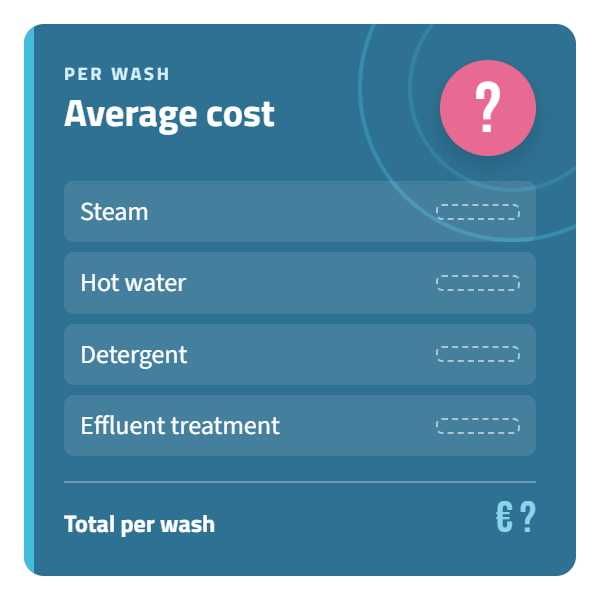
How many tanks went through your bay last week? You probably know within seconds. Now the harder one: what did the average wash cost you in steam, hot water, detergent and effluent treatment? And which of your cleaning methods actually makes money, and gets tanks through fastest?
If that second question makes you pause, you're not alone. For years the price list was set once, the boiler just ran and the margins were fine. That comfort is gone, whether you're running the shift or answering to the board. Now your yard's throughput depends on it too.
What's happening right now
Three signals every cleaning bay should read



Where the money leaks: four pain points inside a yard
A cleaning bay inside a depot has its own twist. Tanks arrive via the gate and the stack, not straight from a truck, and the bay often shares steam and water with heating. That makes costs harder to pin down, and turnaround less predictable.
1. Re-cleans eat the margin
A wrong last-cargo entry or a missed customer instruction means washing the same tank twice. You pay double for energy, water and labour, and bill once. Worse: that extra hour in the bay blocks the next tank in your queue, stretching turnaround and tightening your yard.
2. One price list, very different washes
A light rinse after a food-grade product and a multi-step clean after a sticky resin often sit too close together on the price list. Without cost per method, you can't see which work quietly loses money. You also can't optimize for turnaround, your operators choose by gut, not by speed or efficiency targets.
3. Shared utilities hide the truth
When the boiler serves both the wash bay and the heating bay, nobody knows who used what. Heating looks profitable, cleaning looks expensive, or the other way round. More important: you can't spot bottlenecks. Is turnaround slow because of water pressure, steam capacity, or operator timing? You can't fix what you can't see.
4. The crew runs on experience
Your best operators know which tanks need an extra cycle. New staff don't. Without method rules in the system, consumption, and wash time, depends on who is on shift. That turnaround variance is pure yard inefficiency. It also costs you compliance points: EFTCO, SGF (food-grade), and your customer contracts all demand documented procedures and traceability now. Hand-written logs don't hold up in an audit.
Four moves you can make this quarter
No big project needed. Just clear eyes No big project needed. Just clear eyes, your own data, and a system that connects washing to both cost and compliance.your own data.




This is ground DEPOT Software has covered with depots and cleaning stations since 1996. The Cleaning Services module links cleaning methods and pricing to product and customer, connects with common cleaning installations and runs on the same platform as the gate. It tracks cost per wash and turnaround per method, so you see which approach works fastest, and cheapest, for each scenario. Your data stays yours; the point is that you can finally see it. And auditors can see it too: EFTCO and SGF compliance trails, built in.
The bottom line
DEPOT Software. Your Next Move.
The cleaning bays that come out strong from the next few years won't just be the fastest. They'll be the ones where the Operations Manager knows what each wash costs, and the MD can see which services carry the business, and which turnaround targets are actually realistic. Curious how your cost per wash compares, or where your turnaround really sits? We're happy to think it through with your team.